From gap to growth: Advancing women’s economic activity
Europe needs talent. Yet barriers continue to prevent many women from entering the workforce and developing their careers. What would it take to unlock this potential?
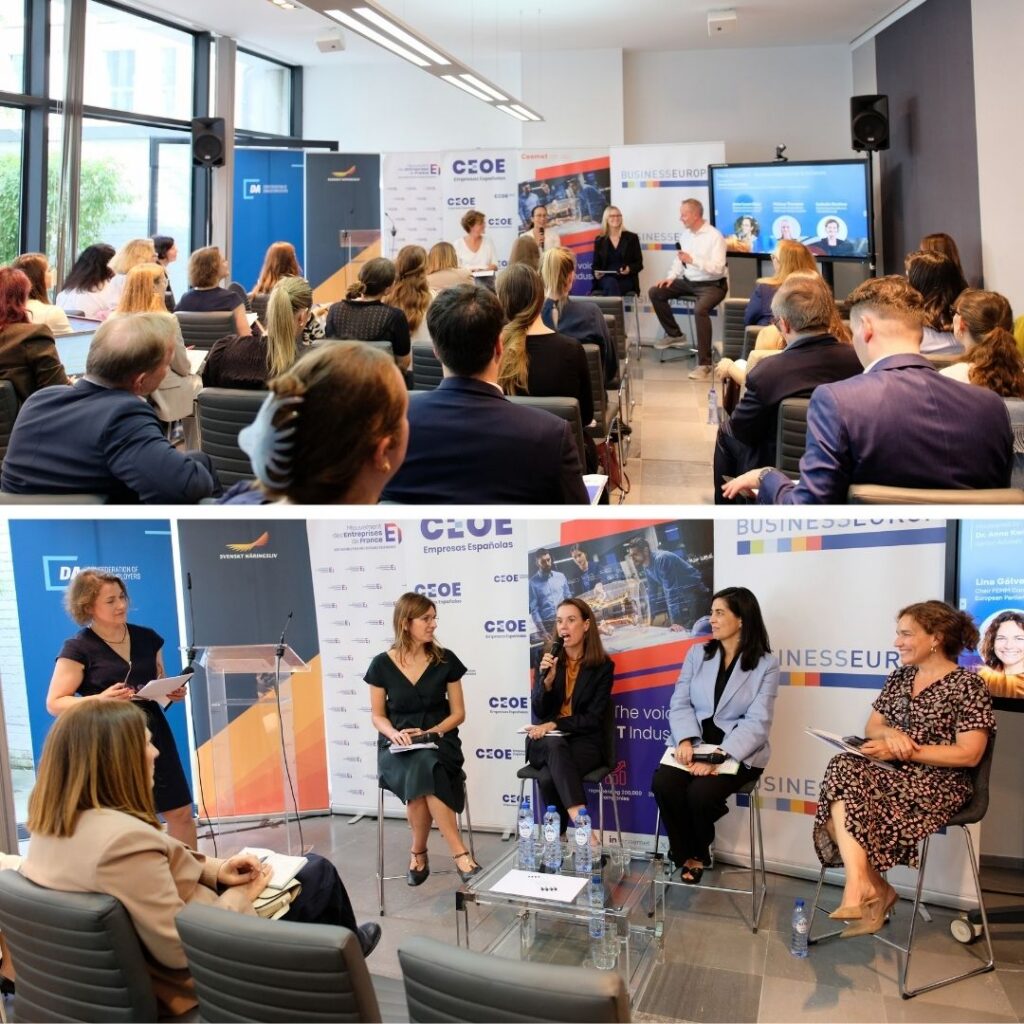
This question shaped the seminar we co-hosted on 29 September with SN, MEDEF, DA, CEEMET and CEOE, bringing together business representatives, social partners and EU institutions to explore practical solutions. “There are a lot of women who could work under the right conditions,” said Barbara de Micheli, Head of the Social Justice Unit at Fondazione Giacomo Brodolini, in her keynote speech.
Creating the right conditions
Turning that potential into participation requires action on several fronts. Our Adviser Giorgia Antonucci outlined three priorities for employers: removing barriers and strengthening incentives for women to enter and remain in work; expanding pathways into STEM, ICT and vocational education and training; and advancing gender equality through everyday workplace practices and targeted initiatives.
From priorities to workplace practice
How can these priorities translate into opportunities at work? The first panel explored initiatives to attract, retain and advance women, from mentoring and professional networks to targeted career development programmes.
Panellists stressed that building inclusive working environments requires sustained leadership commitment. “Women make up 50 per cent of our workforce, but it has been a long journey. We have focused on improving the working environment and challenging stereotypes,” said Anne-Laure Kuhn, Director of Labor Relations at Amazon France.
Speakers also highlighted that social dialogue can help identify solutions suited to different sectors, while lasting cultural change requires employers to challenge assumptions about who belongs in particular roles.
Supporting progress through policy
Workplace initiatives are part of the answer. The second panel explored how policy, including the EU’s Gender Equality Strategy, can help create the conditions for these efforts to succeed. Discussions highlighted unequal access to opportunities and persistent gender imbalances across sectors, including STEM and care. Involving employers and social partners in developing measures that work helps ensure that measures respond to labour market realities and deliver practical results.
Focusing on what delivers
Closing the seminar, Dr Gabriella Sebardt, Chair of BusinessEurope’s Equal Opportunities Network, brought the discussion back to a central question: “The test for every measure should be simple: does it help people participate and help employer recruit, retain and develop the talent they need?”
The event reaffirmed that closing the gender employment gap and unlocking the untapped potential of up to 17.3 million additional women who could enter Europe's workforce by 2030 requires sustained, coordinated action from business and policymakers alike.