
Position papers & reports
19 October 2026
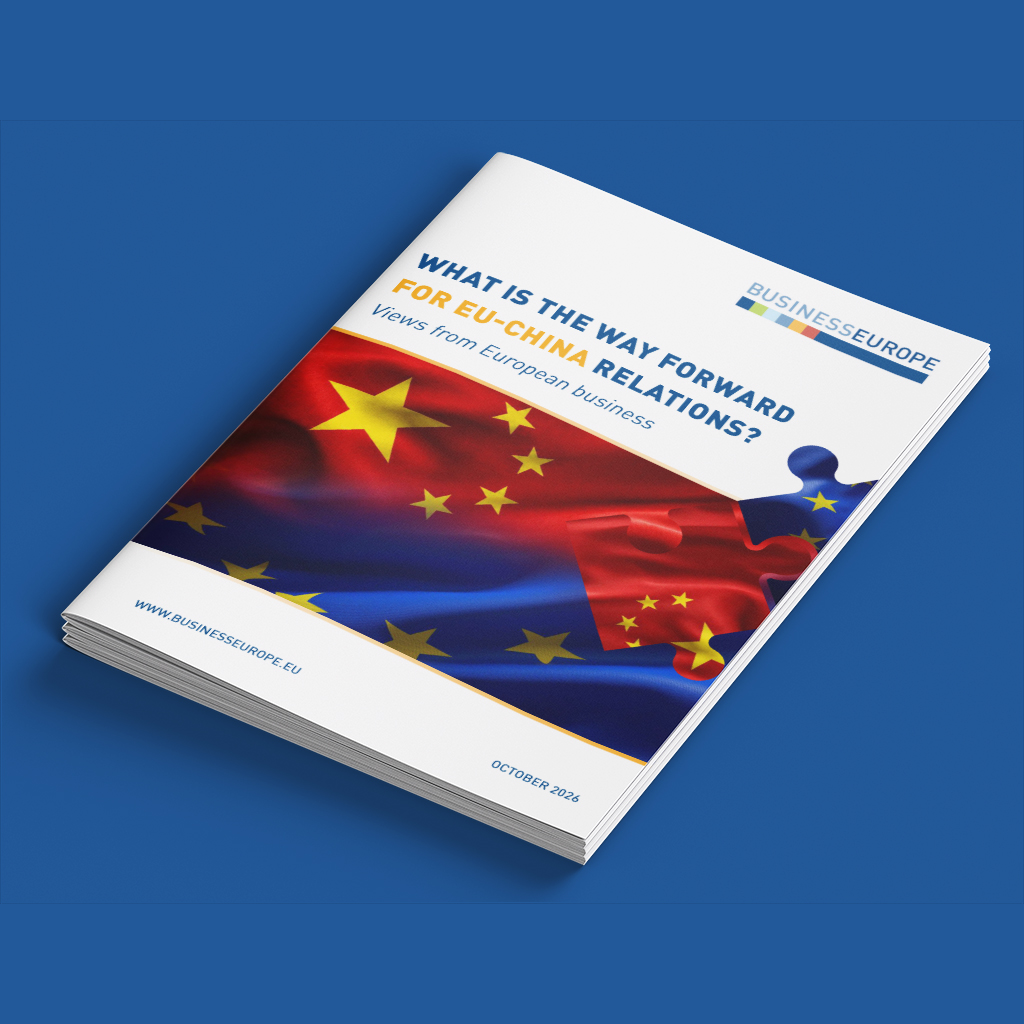
What is the way forward for EU-China relations – Views from European business
Documents
Trade and international relationsBilateral relationsChina
Key messages
- The EU’s dual-track approach to China – firm where necessary, open where possible – must be implemented more effectively. China remains a major market and source of innovation for European businesses. At the same time, China now competes with Europe in high-value sectors, often on unfair terms. Systemic risks, dependencies and market distortions have increased significantly. The EU should therefore implement its de-risking agenda more consistently, by strengthening competitiveness, reducing critical dependencies and defending against market distortions through effective use of its trade toolbox, while also actively shaping cooperation where interests align.
- Not all trade with China carries the same risk. The EU must build explicit criteria in dialogue with business to separate security-sensitive trade from ordinary competitive challenges and implement its toolbox accordingly. Security tools - FDI screening, export controls, anti-coercion - should be deployed to address security risks, while instruments such as Trade Defence Instruments, Foreign Subsidies Regulation and International Procurement Instrument - should be used to deal with competitive distortions. Existing instruments should be used to their full potential and strengthened where necessary, including with more resources, before new tools are created. Using the EU’s toolbox effectively would also help strengthen the EU’s leverage.
- The EU must be transparent about where costs fall and be prepared to bear them. A credible European response to the current challenges will not be cost-free. China has signaled it will retaliate against EU action. Yet, the cost of inaction - in lost competitiveness, deepening dependency and industrial erosion - is also high. The current trajectory is not sustainable. BusinessEurope supports proportionate, WTO-consistent, targeted measures, paired with a genuine European competitiveness agenda. Any diversification instrument or support mechanism for retaliation-hit sectors requires further assessment and wider consultation, including with businesses.