The EU-Mercosur trade agreement: What comes next?
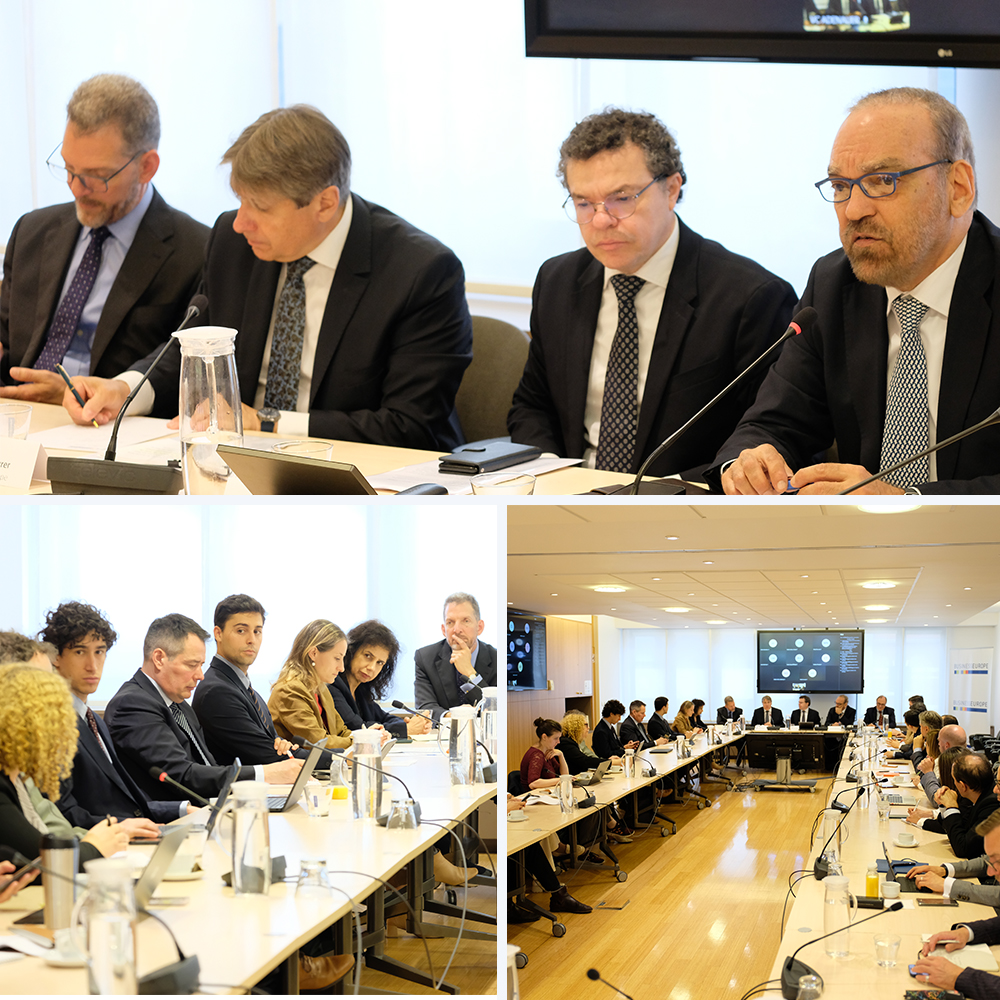
We hosted a breakfast discussion on how to further strengthen the EU-Mercosur partnership and maximise the opportunities it creates for businesses on both sides of the Atlantic. The event brought together the Ambassadors of the four Mercosur countries: Fernando Adolfo Iglesias (Argentina), Pedro Miguel da Costa e Silva (Brazil), Enrique Miguel Franco Maciel (Paraguay) and Pablo Emilio Sader Hernandez (Uruguay).
Opening the discussion, our Director General Markus J. Beyrer highlighted that the EU-Mercosur is more than a conventional trade deal: "It is unique in its economic significance. It creates a market of over 750 million consumers encompassing nearly 20% of global GDP. Mercosur, with a combined GDP of €2.9 trillion, is the fifth-largest economy outside the EU".
The Ambassadors shared their perspectives from Mercosur – how the countries in the region view the agreement and what it means for the economies in the region. Asked about the main benefit they expect, the Ambassadors highlighted increased investment (Argentina), trade diversification (Brazil), access to financing (Paraguay) and expanded renewable energy (Uruguay).
Since 1 May, European companies benefit from trade-related provisions of the interim Trade Agreement: tariffs and non-tariff barriers are reduced or removed, public procurement opportunities are accessible in Mercosur countries, and modernised rules on licensing, conformity assessment, labelling, and international standards are making it easier to do business across the region.
The priority now is to ensure effective implementation. We believe the tangible benefits that companies experience during the provisional application will provide a strong argument in support of full ratification by the European Parliament and Member States after the European Court of Justice’s ruling.